
CCTV Cybersecurity in 2026: Complete Guide to Secure Surveillance Systems
Modern CCTV systems are smarter than ever. Today’s IP cameras come with AI analytics, cloud storage, remote viewing, and mobile access. But with these advanced features comes a growing problem — cybersecurity threats.
In 2026, CCTV hacking has become one of the biggest concerns for homes, businesses, warehouses, schools, and smart city projects. Many surveillance systems are connected directly to the internet without proper security, making them easy targets for hackers.
This guide explains the most common CCTV cybersecurity risks and how to protect your surveillance system using practical and professional methods.
Why CCTV Cybersecurity Matters
A hacked CCTV system can lead to:
- Unauthorized camera access
- Video recording theft
- Privacy violations
- System shutdown
- Data leaks
- Ransomware attacks
- Network breaches
Hackers often target surveillance systems because many installers and users ignore basic network security settings.
Common CCTV Cybersecurity Threats in 2026
1. Weak Passwords
Many users still use default passwords like:
- admin/admin
- 12345,00000
- password
Hackers can easily access cameras using automated scanning tools.
Solution
Always:
- Change default passwords
- Use strong passwords
- Enable two-factor authentication if available
Example of a strong password:
CCTV@2026Secure#
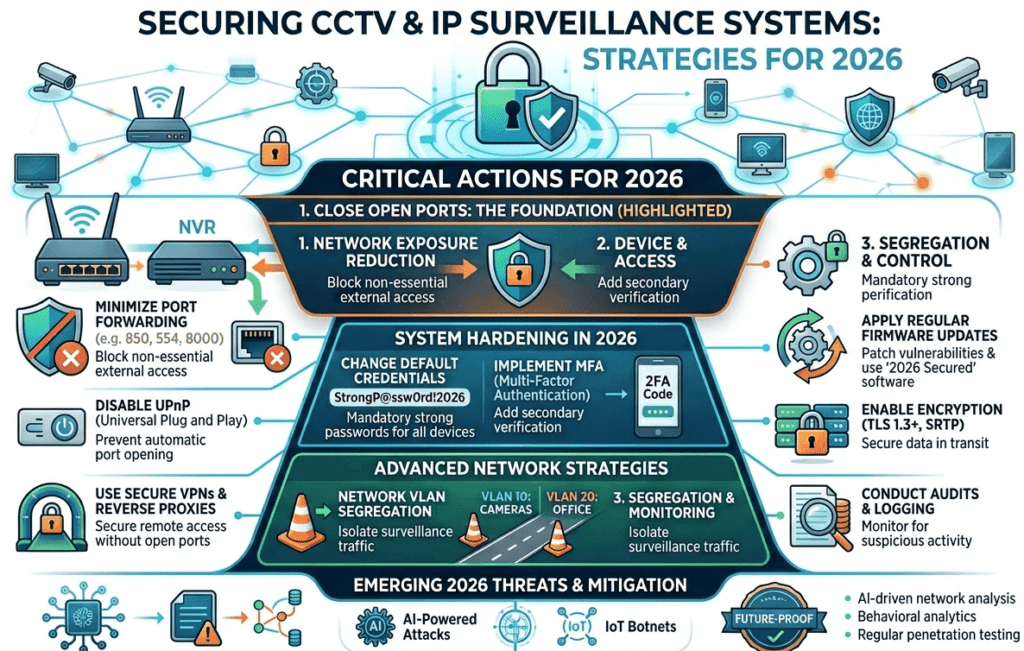
2. Open Ports on Router
Many CCTV systems use port forwarding for remote viewing. Open ports expose cameras directly to the internet.
Dangerous Ports
- HTTP: 80
- RTSP: 554
- Server ports
Better Solution
Use:
- VPN access
- P2P secure cloud access
- Firewall filtering
Avoid exposing cameras directly to public internet whenever possible.
3. Outdated Firmware
Old firmware contains security vulnerabilities.
Manufacturers regularly release updates to fix:
- Security bugs
- Remote access vulnerabilities
- Malware risks
Best Practice
- Update firmware every few months
- Download firmware only from official manufacturer websites
- Backup settings before upgrading
4. No VLAN Separation

One of the best security practices in 2026 is using VLANs.
What is VLAN (Read more on VLAN)
A VLAN (Virtual Local Area Network) separates CCTV traffic from office computers and public networks.
Example
| Device | VLAN |
|---|---|
| CCTV Cameras | VLAN 10 |
| Office Computers | VLAN 20 |
| Guest WiFi | VLAN 30 |
Benefits
- Prevents hackers from accessing business systems through cameras
- Reduces network congestion
- Improves surveillance security
Managed switches from companies like D-Link and TP-Link support VLAN configuration.
5. Unsafe Remote Viewing Apps
Some low-quality mobile apps collect user data or have poor encryption.
Best Practices
- Use official apps only
- Enable encrypted connections
- Avoid public WiFi for remote viewing
- Regularly update mobile applications
Best CCTV Cybersecurity Practices in 2026
Use Strong Network Security
Recommended:
- Firewall protection
- VLAN segmentation
- VPN remote access
- HTTPS encryption
Change Default Settings
Always:
- Rename devices
- Disable unused services
- Change default ports if necessary
Limit User Permissions
Create different user accounts:
- Admin
- Operator
- Viewer
Do not share admin access with all users.
Monitor System Logs
Modern NVR systems can detect:
- Failed login attempts
- Unknown devices
- Suspicious activities
Regular monitoring helps detect attacks early.
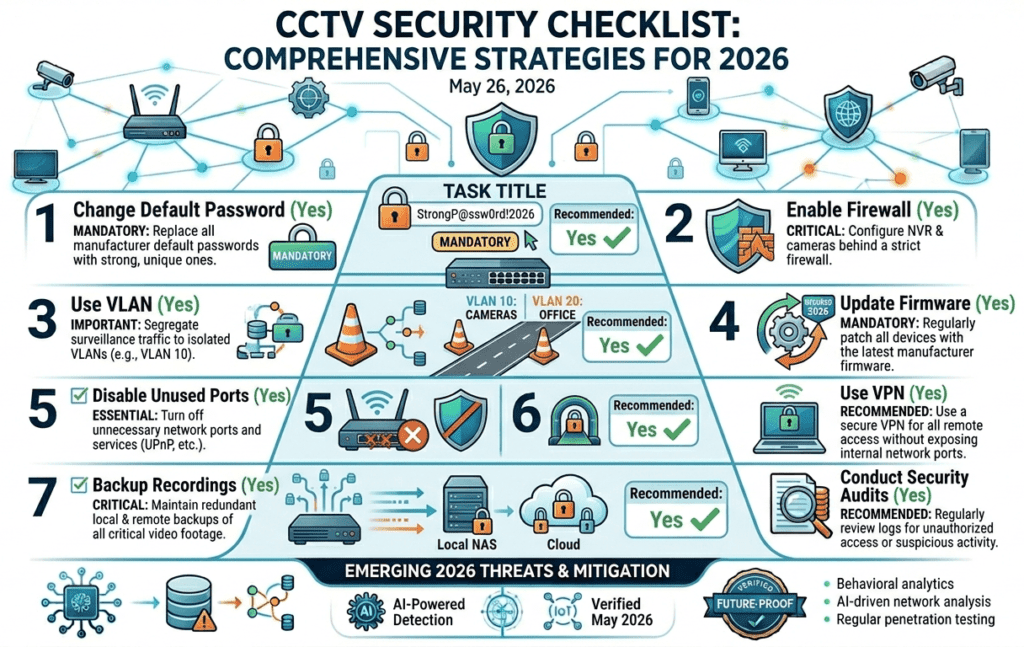
CCTV Security Checklist
| Security Task | Recommended |
|---|---|
| Change default password | Yes |
| Enable firewall | Yes |
| Use VLAN | Yes |
| Update firmware | Yes |
| Disable unused ports | Yes |
| Use VPN | Yes |
| Backup recordings | Yes |
Future of CCTV Cybersecurity
Future surveillance systems will include:
- AI-based threat detection
- Zero-trust network architecture
- Encrypted cloud recording
- Advanced biometric authentication
- Cybersecurity monitoring dashboards
As CCTV systems become smarter, cybersecurity will become even more important.
Final Thoughts
CCTV systems are no longer simple recording devices. They are now connected network systems that require proper cybersecurity protection.
A secure surveillance network protects not only video recordings but also the entire business infrastructure. Whether you manage a small office or a large smart city project, following proper cybersecurity practices is essential in 2026.