
AI in Modern CCTV Systems
Complete Guide of Analytics in Modern CCTV Systems
Artificial Intelligence (AI) has transformed traditional CCTV systems from passive recording devices into intelligent security platforms capable of detecting, analyzing, and responding to events in real time.
Modern IP cameras no longer simply record video—they understand scenes, identify objects, classify humans and vehicles, count people, detect suspicious behavior, and automatically alert operators before incidents escalate.
This guide explains the most important AI video analytics features used in modern surveillance systems, how they work, and where they should be deployed.
What is Video Analytics?
Video Analytics (VA) is the process of using artificial intelligence and computer vision algorithms to analyze live or recorded video streams.
Instead of relying on security personnel to continuously monitor cameras, analytics automatically identify predefined events and generate alarms when specific conditions are met.
Typical workflow:
Camera
      │
      ▼
Video Processing
      │
      ▼
AI Detection
      │
      ▼
Object Classification
      │
      ▼
Alarm Generation
      │
      ▼
Recording + Notification
Intrusion Detection (Perimeter Protection)

What is Intrusion Detection?

Intrusion Detection generates an alarm whenever a person or vehicle enters a protected area.
Unlike motion detection, AI intrusion detection ignores environmental movement such as:
- Trees
- Rain
- Animals
- Shadows
- Headlights
Only valid targets trigger alarms.
Working Principle
- Define a protected area.
- AI continuously monitors the region.
- Human or vehicle enters.
- AI classifies the object.
- Alarm is generated.
Applications
- Data Centers
- Airports
- Oil & Gas Facilities
- Hospitals
- Military Installations
- Warehouses
- Solar Farms
Advantages
✔ Low false alarms
✔ Accurate day/night detection
✔ Human and vehicle filtering
✔ Instant notification
Crossline Detection (Tripwire)


What is Tripwire?
Tripwire Detection creates an invisible virtual line.
Whenever someone crosses this line, an alarm is generated.
Direction can also be configured.
Example:
Allowed Direction

←

Forbidden Direction

→ Alarm- Emergency exits
- Restricted corridors
- Building entrances
- Factory gates
- Loading docks
Double Crossline (Double Tripwire)
Instead of a single line, two virtual lines are created.
The alarm is generated only when the object passes through both lines in sequence.
This significantly reduces false alarms.
Example
Line A
────────────

5 meters

────────────
Line B

Person passes both lines

↓

Alarm- Better object confirmation
- Reduced false alarms
- Direction verification
- Ideal for perimeter fencing
Loitering Detection

Loitering Detection identifies individuals remaining inside a predefined area for longer than an allowed duration.
Example:
Person remains inside ATM lobby for more than 60 seconds.
↓
Alarm.
Ideal Locations
- ATM
- Hospital pharmacy
- Server rooms
- Bank entrances
- VIP areas
Parking Detection
Parking Detection identifies unauthorized or illegally parked vehicles.
Conditions may include:
- Vehicle stopped too long
- Parking inside prohibited zone
- Blocking emergency exits
Common deployments include:
- Fire lanes
- Loading bays
- Airport terminals
- Hospital emergency entrances
Running Detection
Running Detection identifies people moving faster than normal walking speed.
Possible scenarios:
- Panic situations
- Theft
- Emergency evacuation
- Suspicious activity
Useful in:
- Shopping malls
- Schools
- Airports
- Railway stations
Abandoned Object Detection (Object Left)

The camera learns the background scene.
If a new object remains stationary for a configured period, an alarm is generated.
Example:
Person leaves bag

↓

Walks away

↓

Bag remains

↓

Alarm- Airports
- Railway stations
- Hospitals
- Government buildings
- Shopping malls
Missing Object Detection (Object Lost)
Missing Object Detection works opposite to abandoned object detection.
If a monitored object disappears, the camera generates an alarm.
Examples:
- Fire extinguisher removed
- Artwork stolen
- ATM removed
- Display item stolen
People Counting

Typical report:
| Time | Entry | Exit | Occupancy |
|---|---|---|---|
| 09:00 | 150 | 132 | 18 |
| 10:00 | 270 | 251 | 37 |
| 11:00 | 390 | 365 | 62 |
Applications
- Retail stores
- Hospitals
- Stadiums
- Airports
- Office buildings
Benefits
- Occupancy monitoring
- Staff allocation
- Customer analytics
- Emergency evacuation management
Crowd Detection
Crowd Detection identifies excessive gathering of people inside predefined regions.
The AI estimates:
- Number of people
- Density
- Occupancy threshold
- Crowd duration
Ideal for:
- Public events
- Religious sites
- Shopping malls
- Hospitals
- Stadiums
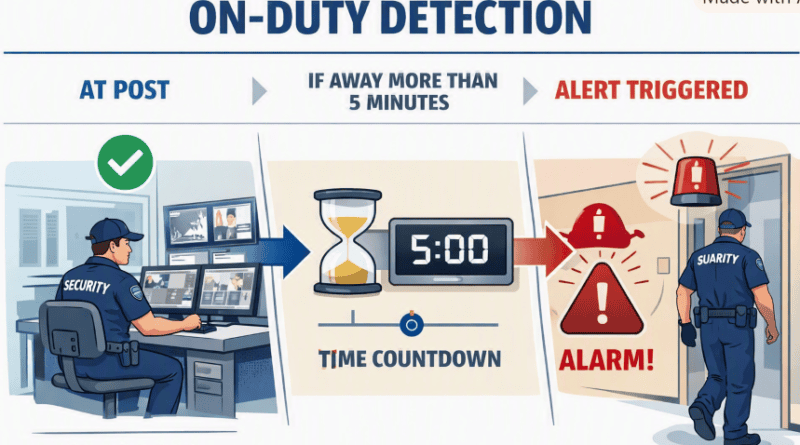
On-Duty Detection
On-Duty Detection monitors whether personnel remain at designated workstations.
Example:
Security guard should remain inside guard room.
If absent for more than five minutes:
↓
Alarm.
Applications:
- Security posts
- Reception desks
- Control rooms
- Industrial monitoring stations
Abnormal Video Detection
The camera continuously monitors video quality.
It detects:
- Camera covered
- Defocus
- Scene change
- Brightness issues
- Camera moved
Typical alarms include:
- Video Loss
- Image Blur
- Lens Covered
- Camera Tampering
Abnormal Audio Detection
Microphones analyze sound patterns to identify unusual acoustic events.
Examples:
- Gunshot
- Glass breaking
- Explosion
- Screaming
- High noise level
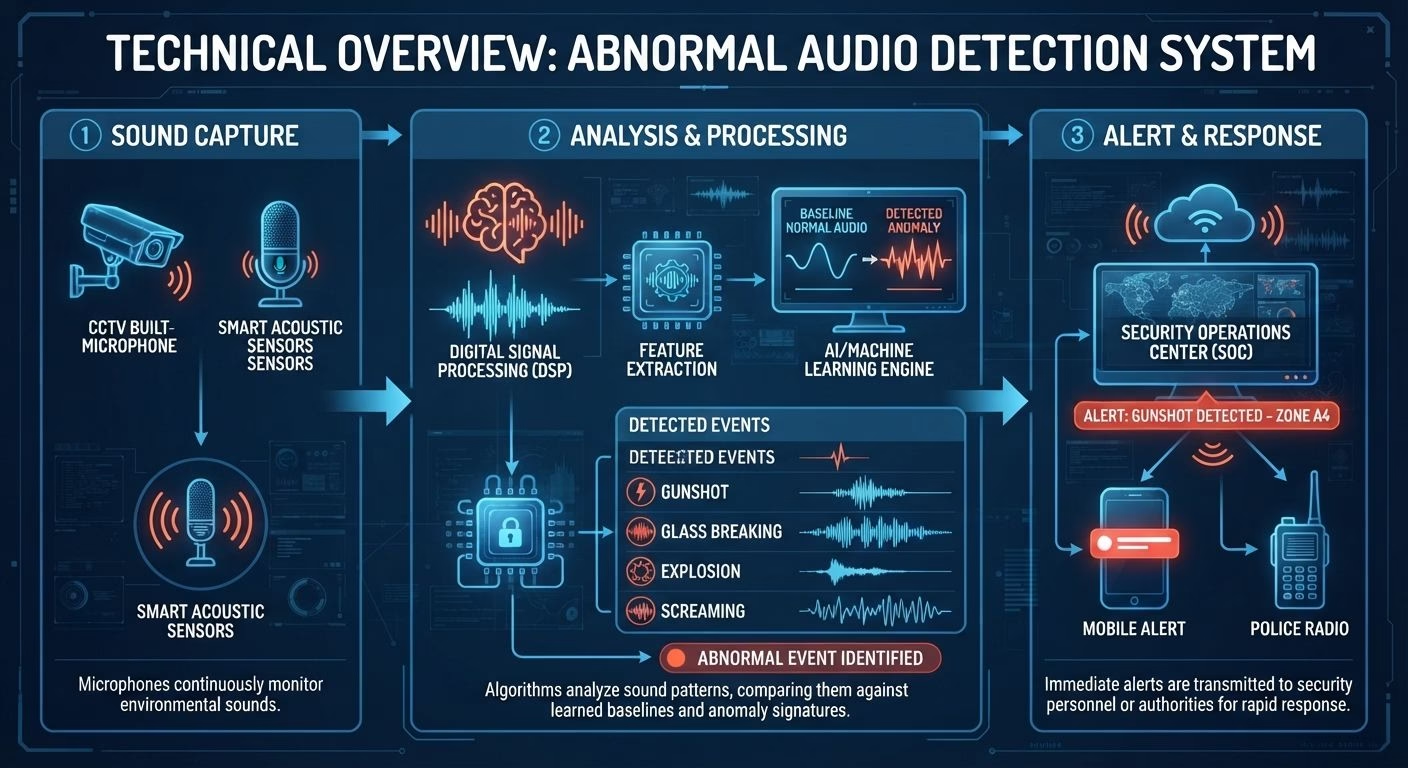
These events trigger immediate alerts for rapid response.
Auto Tracking

Workflow:
Target Detected

↓

AI Classification

↓

PTZ Zoom

↓

Automatic Tracking

↓

Continuous Recording
Advantages:
- Better evidence collection
- Reduced operator workload
- Automatic zoom
- Continuous target monitoring
Ideal for:
- Airports
- Parking lots
- Industrial facilities
- Campuses
- Large warehouses
Human & Vehicle Classification

- Animals
- Rain
- Tree movement
- Shadows
- Flying insects
- Plastic bags
AI Classification Process
Object Detected

↓

Deep Learning Analysis

↓

Human?
Vehicle?
Other?

↓

Alarm Decision- Dramatically reduced false alarms
- Faster incident verification
- More accurate event searches
- Improved perimeter protection
Best Deployment Locations
| Analytics Feature | Typical Applications |
|---|---|
| Intrusion | Perimeter fences, restricted areas |
| Tripwire | Gates, entrances, exits |
| Double Tripwire | High-security perimeters |
| Loitering | ATM lobbies, reception areas |
| Parking | Fire lanes, loading bays |
| Running | Schools, malls, transport hubs |
| Abandoned Object | Airports, hospitals, stations |
| Missing Object | Museums, retail, equipment rooms |
| People Counting | Retail, offices, hospitals |
| Crowd Detection | Stadiums, public venues |
| On-Duty Detection | Guard rooms, control centers |
| Abnormal Video | All camera installations |
| Abnormal Audio | Critical infrastructure, public spaces |
| Auto Tracking | PTZ surveillance zones |
| Human & Vehicle Classification | Any AI-enabled perimeter or traffic monitoring system |
Best Practices for Reliable AI Analytics
- Mount cameras securely to minimize vibration.
- Choose the correct lens and field of view for the target area.
- Avoid direct backlighting and excessive glare.
- Keep camera firmware updated.
- Configure detection zones carefully to exclude trees, roads, or reflective surfaces.
- Verify performance during both daytime and nighttime conditions.
- Periodically clean camera lenses to maintain image quality.
- Fine-tune sensitivity and object-size thresholds to reduce nuisance alarms.
Conclusion
AI-powered video analytics have transformed surveillance from passive monitoring into proactive security. Features such as intrusion detection, tripwire, loitering, people counting, auto tracking, and human/vehicle classification enable organizations to detect threats earlier, reduce false alarms, improve operational efficiency, and enhance safety across commercial, industrial, healthcare, transportation, and critical infrastructure environments.
When properly designed and configured, these analytics provide faster incident response, stronger perimeter protection, and valuable operational insights—making them an essential component of modern IP video surveillance systems.
