
The Real Value of Integrating CCTV, Access Control, and Alarm Systems
I visited a warehouse where the owner proudly showed me his newly installed CCTV system. The facility had more than 40 cameras covering every corner of the property. On paper, the security setup looked impressive.
A few months later, an expensive piece of equipment went missing.
The surprising part wasn’t that the theft happened. The surprising part was that the cameras had actually recorded the entire incident.
The problem was that nobody noticed it few days.
This is one of the biggest misconceptions in physical security: installing more cameras does not automatically make a site more secure. Cameras are excellent at recording events, but they don’t always help prevent them.
This is where security integration comes into the picture.
Today, businesses are moving beyond standalone CCTV systems and connecting them with access control and alarm systems. Instead of three separate technologies working independently, they become part of a single intelligent security ecosystem.
The Problem with Standalone CCTV Systems
For years, CCTV systems were mainly used as a tool for investigation.
If something went wrong, security personnel would review hours of footage to identify what happened.
While this approach still has value, it comes with several challenges:
- Incidents may go unnoticed for hours.
- Security teams spend significant time reviewing footage.
- There is often no immediate response to suspicious activity.
- Important events can be missed in large facilities with dozens or hundreds of cameras.
Imagine a warehouse with 80 cameras installed across multiple buildings.
A security guard cannot realistically watch every camera feed simultaneously. Even if the incident is recorded, there is a good chance nobody notices it in real time.
This is where integration changes everything.
Understanding the Three Pillars of Modern Security
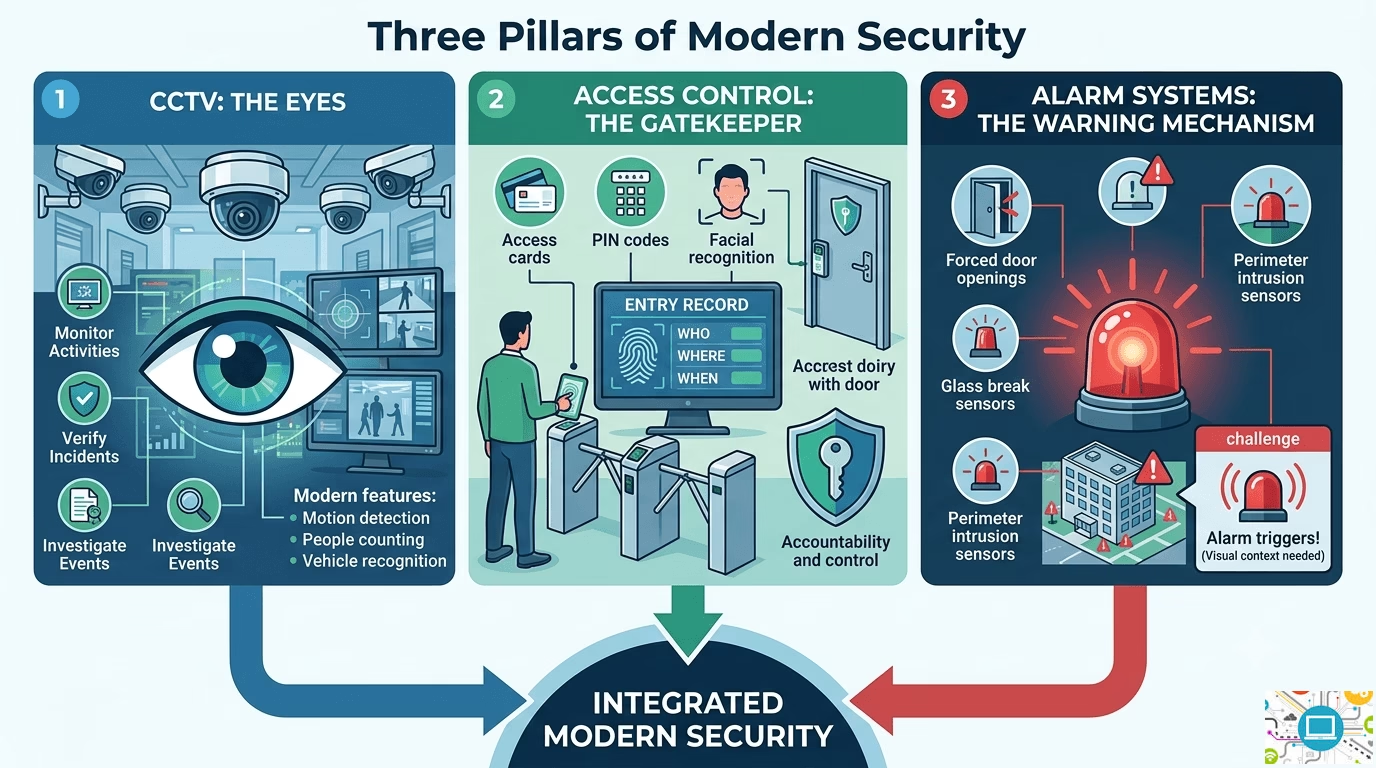
Before discussing integration, let’s look at the role of each system.
CCTV: The Eyes of the Security System
CCTV cameras provide visual information.
They help security teams:
- Monitor activities
- Verify incidents
- Gather evidence
- Investigate events
- Monitor remote locations
Modern cameras can also provide intelligent features such as motion detection, people counting, intrusion detection, and vehicle recognition.
However, cameras alone do not control access or prevent unauthorized entry.
They simply observe.
Access Control: The Gatekeeper
An access control system determines who can enter a building, room, or restricted area.
Access can be granted through:
- Access cards
- PIN codes
- Mobile credentials
- Fingerprints
- Facial recognition
Every entry attempt creates a digital record, showing who entered, where they entered, and when they entered.
This provides accountability and control over sensitive areas.
Alarm Systems: The Warning Mechanism
Alarm systems are designed to detect unusual or unauthorized activity.
Examples include:
- Forced door openings
- Glass break sensors
- Motion detectors
- Perimeter intrusion sensors
- Fire and smoke detection
Their job is to alert people when something requires immediate attention.
The challenge is that alarms alone cannot tell the full story.
An alarm can indicate that something happened, but it cannot visually confirm what actually caused it.
Why Integration Makes Such a Big Difference
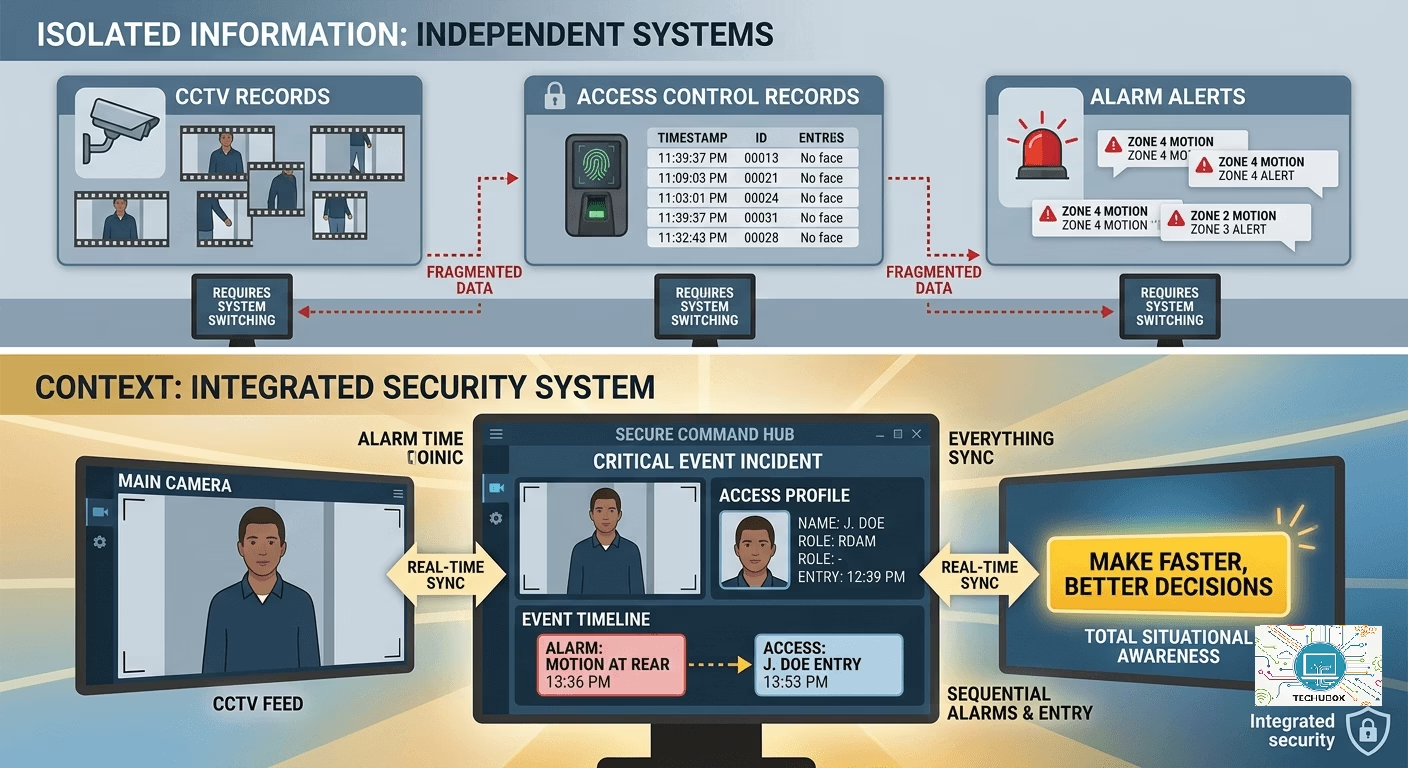
Think about how these systems work independently.
A camera records activity.
An access control system records entry attempts.
An alarm system generates alerts.
Each system creates useful information, but the information remains separated.
Security personnel often need to switch between different software platforms to understand what happened.
Integrated security combines all these pieces into a single picture.
Instead of collecting isolated information, the system creates context.
And context is what helps people make faster and better decisions.
A Real-World Scenario
Imagine a company has a restricted server room containing critical business infrastructure.
One evening, an employee attempts to access the room outside approved working hours.
Without Integration
Several things happen independently:
- The access control system records the denied access attempt.
- Nearby CCTV cameras continue recording normally.
- Security personnel remain unaware of the event.
- The incident may only be discovered during a later review.
By the time someone notices, hours or even days may have passed.
With Integration
The response is completely different.
The moment access is denied:
- The event is logged automatically.
- The nearest CCTV camera is highlighted on the monitoring screen.
- Video recording is marked as a priority event.
- Security personnel receive an alert.
- Relevant footage is linked directly to the access event.
Instead of reviewing hours of recordings, operators can immediately see exactly what happened.
This saves time and significantly improves response capability.
Faster Incident Response
One of the most valuable benefits of integration is speed.
In security, delays can be costly.
When a suspicious event occurs, every minute matters.
An integrated system helps eliminate the delay between detection and action.
For example, if a perimeter sensor detects movement during non-business hours:
- Cameras automatically focus on the area.
- Security operators receive an instant notification.
- Live video appears immediately.
- The event is recorded and stored for future review.
Instead of investigating after the fact, the security team can respond while the event is still happening.
Reducing False Alarms
False alarms are one of the biggest frustrations in security operations.
A motion detector may trigger because of:
- Animals
- Weather conditions
- Moving objects
- Environmental factors
Without video verification, security personnel may need to physically investigate every alert.
With CCTV integration, operators can instantly check the corresponding camera feed and determine whether the threat is genuine.
This reduces unnecessary dispatches and improves operational efficiency.
Improved Accountability
Access control systems create detailed logs of who enters specific areas.
When linked with CCTV footage, those records become even more valuable.
For example:
A storage room contains expensive equipment.
The access control system shows that five employees entered the room during a particular day.
If equipment later goes missing, security can quickly match access records with video footage.
This eliminates guesswork and provides a clear timeline of events.
The result is greater accountability and easier investigations.
Better Protection for Critical Areas
Certain locations require higher levels of security than others.
Examples include:
- Server rooms
- Data centers
- Research laboratories
- Pharmaceutical storage areas
- Executive offices
- Financial record archives
Integrated systems allow organizations to apply additional security measures to these locations.
For instance:
- Access attempts can trigger automatic video recording.
- Door forcing can activate alarms.
- Unauthorized access can generate immediate notifications.
- Security personnel can receive live visual verification.
This layered approach provides stronger protection than any individual system could achieve on its own.
Simplified Security Management
One often overlooked advantage of integration is operational simplicity.
Many facilities use separate software for:
- CCTV monitoring
- Access control management
- Alarm monitoring
Managing multiple systems increases complexity and training requirements.
Integrated platforms allow operators to manage everything from a single interface.
Instead of searching through different applications, they can:
- View live cameras
- Check access logs
- Monitor alarms
- Generate reports
- Investigate incidents
All from one location.
This improves productivity and reduces human error.
The Role of Automation
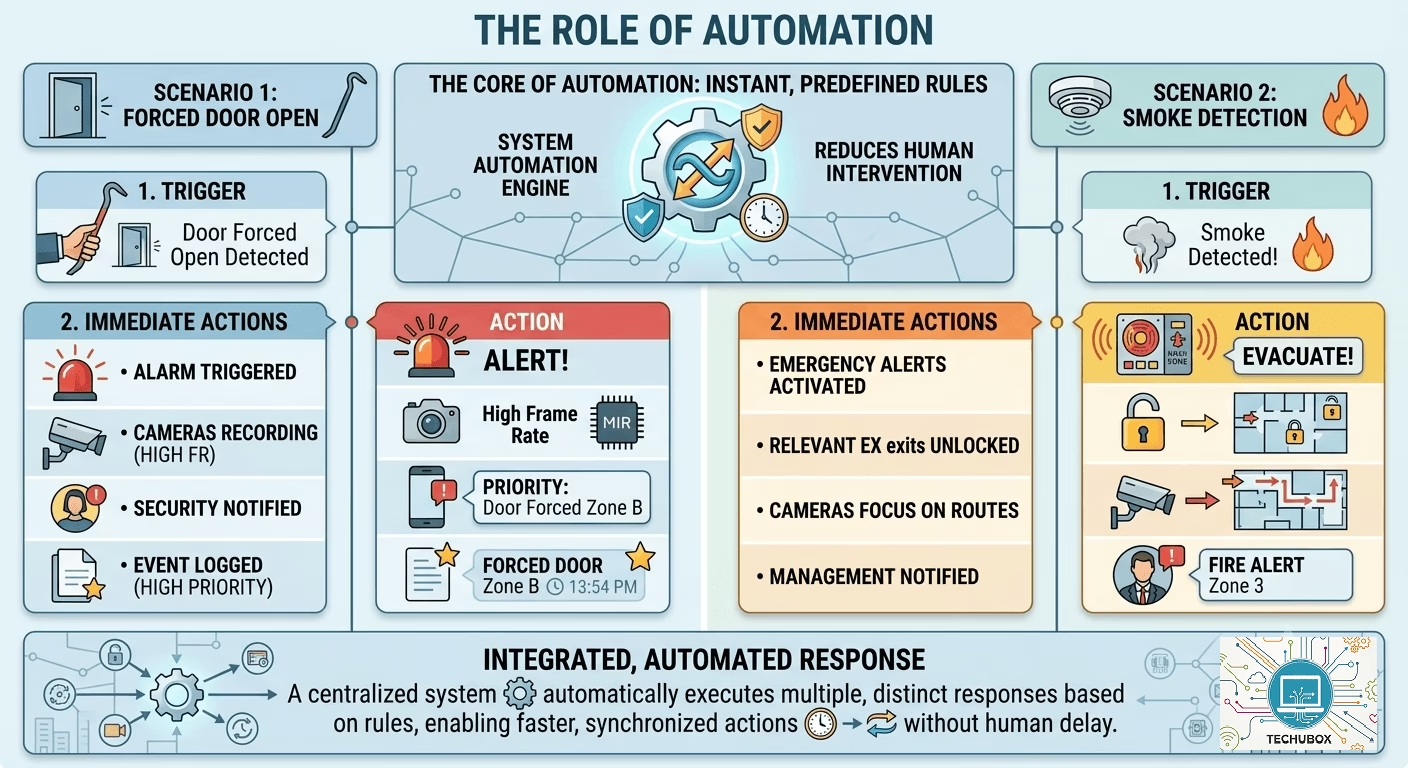
Modern integrated systems can automatically perform actions based on predefined rules.
For example:
If a door is forced open:
- An alarm is triggered.
- Nearby cameras begin recording at a higher frame rate.
- Security staff receive notifications.
- The event is stored as a high-priority incident.
If smoke is detected:
- Emergency alerts are activated.
- Relevant exits can be unlocked.
- Cameras focus on evacuation routes.
- Management receives notifications.
Automation helps organizations respond faster without relying entirely on human intervention.
Industries Benefiting from Security Integration
Although integrated security is often associated with large enterprises, organizations of all sizes can benefit.
Warehouses and Logistics Centers
Protect inventory, loading docks, and restricted storage areas.
Corporate Offices
Manage employee access and monitor sensitive departments.
Educational Institutions
Control access to buildings while improving student and staff safety.
Healthcare Facilities
Protect medical records, pharmacies, laboratories, and restricted treatment areas.
Manufacturing Facilities
Monitor production zones and secure high-value equipment.
Residential Communities
Improve visitor management and perimeter security.
Looking Ahead
Security technology continues to evolve.
Artificial intelligence, video analytics, facial recognition, and intelligent automation are becoming increasingly common.
However, the real power of modern security does not come from individual devices.
It comes from how those devices work together.
A camera that sees, a door controller that decides, and an alarm that warns can create a much stronger security environment when they operate as a unified system.
Final Thoughts
Installing CCTV cameras is no longer enough to meet modern security challenges.
Organizations need systems that can detect, verify, and respond to incidents in real time.
Integrating CCTV with access control and alarm systems transforms security from a passive recording tool into an active protection solution.
The result is faster response times, better situational awareness, improved accountability, and stronger protection for people, assets, and critical operations.
In an age where security threats are becoming more sophisticated, integration is not just an added feature—it is quickly becoming a necessity.